

Source:https://share.google/4ewlV0OGAVWs2I4Bi
Digital Literacy in the Age of Misinformation:
Why Critical Thinking Matters More Than Ever
Did you know that false news can spread 6 times faster than the truth online?
According to research published in Science Magazine, fake stories reach more people, faster, than true ones on social media. Science – The spread of true and false news online
Imagine opening your WhatsApp only to discover dozens of messages claiming that Bolt had suspended all its operations in Kenya. Within hours, the message had spread across countless WhatsApp groups and social media platforms. Many Nairobi residents believed it and began wondering how they would get home, only for Bolt to later confirm that the information was completely false.
I have personally received countless forwarded messages in family and community WhatsApp groups that turned out to be inaccurate or misleading. These experiences have made me realize just how important digital literacy has become in our everyday lives.
Today, we live in a world that is connected by screens. From the moment we wake up, many of us reach for our smartphones to check messages, scroll through social media, read the news, or watch reels. We use computers and tablets to work, study, shop, bank, and stay connected with family and friends across the globe. In just a few seconds, we can access information from almost anywhere in the world. However, I have also come to realize that not everything online is true. The same platforms that allow us to access useful information can also expose us to misinformation and disinformation. Both have become common features of the digital age and can spread rapidly through platforms such as WhatsApp, Facebook, TikTok, Instagram, and X.

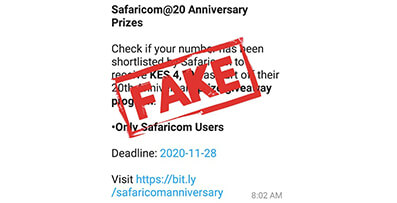
Source:https://www.safaricom.co.ke/fraud-awareness/hoax-sms/fake-promotions
One thing that stands out to me is how quickly information travels online. A message can be forwarded thousands of times within a few hours, regardless of whether it is true or false. The Bolt incident is a good example of how quickly misinformation spreads online, yet many people believed and shared the information without verifying it.
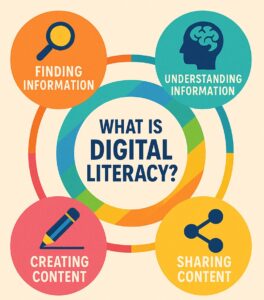
This brings me to the concept of digital literacy. Before researching on this topic, I thought digital literacy simply meant knowing how to use a computer or smartphone. However, I have learned that it involves much more than that. Digital literacy is the ability to find, evaluate, create, and communicate information responsibly using digital technologies.
For me, being digitally literate means knowing how to determine whether information is reliable before accepting it as true. It means understanding how social media works, protecting personal information online, and communicating respectfully with others. Most importantly, it means developing the ability to think critically about the information I encounter every day.
I have noticed that many people especially the Gen X, assume that if information appears online, then it must be true. Unfortunately, that is not always the case. Anyone with internet access can create content and share it with thousands of people. While this freedom has made communication more democratic, it has also made it easier for false information to spread.
One reason misinformation spreads so quickly is because people often share information before checking its accuracy. I admit that there have been times when I was tempted to forward a message immediately because it sounded important or urgent. However, I have learned that taking a few minutes to verify information can prevent unnecessary confusion.
Another reason misinformation spreads is that emotional content attracts attention. Posts that make people angry, fearful, excited, or shocked tend to receive more likes, comments, and shares. Social media algorithms often promote content that generates strong reactions because it keeps users engaged. Unfortunately, this means that sensational but inaccurate information can sometimes receive more attention than factual information.
Information overload also contributes to the problem. Every day, we are exposed to hundreds of posts, videos, news articles, and advertisements. With so much content competing for our attention, it can be difficult to evaluate every piece of information carefully and as a result, many people rely on quick judgments instead of critical thinking. The World Health Organization even calls this problem an “infodemic” too much information, both true and false, making it hard to know what to believe. WHO – Managing the COVID-19 infodemic

Image: Unsplash/Hartano Creatives
Critical thinking is one of the most valuable skills a person can possess in today’s digital world. To me, critical thinking means taking a step back and asking questions before believing or sharing information. Whenever I encounter a surprising claim online, I try to ask myself several questions: Who created this information? What evidence supports it? Is the source trustworthy? Are other reliable sources reporting the same thing?
These simple questions can make a significant difference. Over time, I have also learned a few practical ways to verify information before believing or sharing it online.
Practical Ways to Verify Online Information
- Check whether the information comes from an official source.
- Search for the same story using Google to see whether other credible news organizations are reporting it.
- Check the publication date, as old stories are often reshared as though they are current.
- Reverse-search suspicious images using tools such as Google Lens.
- Consult fact-checking organizations such as Africa Check or PesaCheck when dealing with questionable claims.
For example, during election periods in Kenya, social media is often flooded with political rumors, edited videos, and misleading claims about candidates. Without critical thinking, it can be easy to accept and share information that is inaccurate or intentionally deceptive. By verifying information through credible news organizations and official sources, we can make more informed decisions. For example, I can compare News from more than one reliable source before sharing.
The consequences of misinformation are not limited to politics. In healthcare, false information can encourage people to ignore professional medical advice. In education, students who rely on unreliable online sources may submit inaccurate assignments and develop misconceptions about important topics. In business, false rumors can damage reputations and affect consumer trust.
One example that many Kenyans can relate to is the spread of online scams. It is common to see fake job advertisements promising high salaries, fraudulent investment opportunities, or messages claiming that someone has won a prize. These scams often exploit people’s hopes and financial needs. Unfortunately, many individuals have lost money because they trusted information that appeared legitimate but was actually fraudulent.
Despite these challenges, I believe there is reason for optimism. Digital literacy is a skill that can be learned and improved. Every internet user has the power to contribute to a healthier online environment by practicing responsible digital behavior. Personally, I try to apply these verification habits consistently whenever I come across information online. I also try to be aware of my own biases because we are often more likely to believe information that supports our existing opinions. These simple habits take only a few minutes, but they greatly reduce the chances of spreading false information.
Educational institutions also have an important role to play. Schools and universities should continue teaching students how to evaluate online information critically. Technology companies can help by strengthening fact-checking systems and reducing the visibility of misleading content. Journalists and media organizations must continue upholding standards of accuracy and professionalism.
As I reflect on the digital world around me, I have come to realize that digital literacy is no longer just a technical skill. It is a life skill. In an age where information is available at the touch of a button, the ability to distinguish between fact and fiction is more important than ever. The internet will continue to shape our lives, and misinformation will likely remain a challenge. However, by developing digital literacy and critical thinking skills, we can protect ourselves from deception and contribute positively to society. The next time I encounter a shocking headline or a viral WhatsApp message, I will remember to pause, question, and verify before clicking the share button.
What about you? Have you ever believed or shared information online that later turned out to be false? Share your experience and let’s continue the conversation about digital literacy and responsible internet use.
Before you leave this page, try this challenge: The next time you see something surprising online, pause for 10 seconds and ask: “Is this really true?”
And if you found this blog helpful, share it with a friend to help spread awareness: not misinformation.

Kennedy Ochieng is a Communications Expert specializing in the faith-based and NGO sector, with a passion for using storytelling and strategic communication to inspire impact and positive social change. I focus on creating clear, engaging, and purpose-driven messages that connect organizations with their audiences in meaningful ways.
KENNEDY OCHIENG
Communications Coordinator St. Austins Parish Msongari

This is a timely and insightful article that clearly shows why digital literacy is about more than using technology. This is about thinking critically before believing or sharing information. I especially appreciated the practical Kenyan examples, which made the message relatable to me. The reminder to verify information before forwarding it is simple but powerful. Overall, this is an informative piece that encourages responsible digital citizenship in an age of misinformation.
Awesome Ken. Your article does a great job of connecting everyday online experiences with the broader issue of misinformation. The article is easy to follow, informative, and encourages readers to become more responsible digital citizens by verifying information before sharing it. This is an important message that more people need to hear.
Thank you for engaging with my content and giving insights on the importance of curbing the spread of misinformation
This is a stellar piece Kennedy and well done with relatable references. The most insightful part is what digital literacy entails; from the basic understanding of it being a basic skill but rather a cardinal life skill in the digital age of “infodemic”.
I will take you back to the 2007 PEV, the most dreadful part of our history. The ignition source was an act but the fuel was misinformation. This just shows what a wrong forward or “share to many” can do.
Taking a pause before sharing and asking oneself, “Is it a must I share?” is my takeaway from this piece.
“Beware of false knowledge; it is more dangerous than ignorance.”Often attributed to George Bernard Shaw.
WELLDONE KENNEDY👏🏿👏🏿
Thanks Odindo for this information.I like to pick something from your comment with the quote attributed to George Benard Shaw.
Beware of false knowledge; it is more dangerous than ignorance.”
Ignorance is simply the absence of knowledge. An ignorant person may recognize that they do not know something and remain open to learning. False knowledge, however, is the illusion of understanding. It gives a person confidence without correctness, making them less likely to question their beliefs or seek the truth. And in this regard someone might pick the quote and use it without clearly understanding that attribution means people say George Bernard Shaw said it, but it does not necessarily mean there is proof that he did.
Nice work
This is very true Karen and actually very informative.
This article is a powerful and timely reminder that digital literacy is no longer just about knowing how to use technology, but about navigating a world flooded with information. I especially appreciated the emphasis on critical thinking as a life skill, and the simple yet effective advice to pause and verify before sharing. The example of the viral Bolt hoax is a perfect illustration of how easily misinformation can spread, and it’s a call for all of us to be more responsible digital citizens here in Kenya.
Indeed, we never take time to verify an information that pops up in our social handles,
Wow what a peace an eye opener, in the way we view things.
Good job bro.
Congrats once again..
Yes, absolutely. Almost anyone who spends time online has been caught off guard at some point. It is easy to look back now and recognize a scam or a fake headline, but when a message lands in a chat with a “Forwarded many times” label, or when a political rumor comes across the screen before or during an election period, our brains are wired to react first and think later.
The takeaway here is how our perspective has shifted from thinking digital literacy is just a basic skill to recognizing it as an active life skill. Comparing sources and cross checking from verified sources like newsroom and articles is key in spotting these fake news. It turns us from passive consumers into active agents in stopping them.
This is absolutely right collins.
This is such a well written and insightful piece Ken.
I appreciate how you’ve presented your ideas in a clear and relatable way while staying focused on the bigger picture. This piece is a great reminder of the power of effective communication in driving positive change. 👏
Thanks Mercy for taking your time to interact with this piece.
Woow! thank you for that great and eye opening write up on digital literacy,reminds me of sometimes back,a friend of mine phone was hacked,and the hacker posted on her status and in some of the groups we shared that the owner of the phone/account had an accident,died and her body had been taken to a funeral home, and it was only way afterwards that one of us thought of calling a close family relative of hers,who clarified that the information was not true and that she was alive,it’s only that her phone and accounts had been hacked,and the misinformation was being spread by the hacker.it was actually a traumatizing moment,and your write up is just an eye opener that misinformation thrives where digital literacy is low, thank you🙏🏻now I know better.
Wooow, that was quite unfortunate.I can just imagine the feeling the victim might have had and especially how information spreads fast in this day and era.
What an article in this times. It’s about time we understand what digital literacy is. 👏 Good job
Thank you very much for the positive feedback.Engage kindly with some shocking revelation by Dbarber254 in the comments. Truly misinformation can be damaging
This is very insightful and a great reminder to be cautious when using the internet. The examples shared are relatable, and the practical takeaways are very simple to implement. It is now up to each one of us to become responsible digital citizens and to continue spreading awareness so that others may also be informed. Well done!
thank you very much
A good read!
May we all become more discerning consumers and sharers of information, using digital platforms to build understanding rather than spread confusion.
thanks Okello
This is such an important reminder that digital literacy is no longer optional, it’s essential. In a world where misinformation spreads faster than facts, our greatest tool is critical thinking. Taking a few seconds to verify information before sharing can protect our communities from harm. Let’s all commit to pausing, questioning, and verifying before we hit “forward.” Thank you Ken I got to learn something 👏🏾
Thanks Judy great insights from you too.
Quite an amazing piece Ken, it’s so helpful especially at this day and age where we experience such fake news and scamming left right and center, this is very informative, Verification of any information is clearly the way to go.
Very informative article. Strengthening digital literacy can help individuals think critically, verify sources, and avoid the spread of false information.
This is a very insightful piece especially in this age of Mobile Journalism and the influencer culture where everyone wants to be among the first to break the news without caring. I agree with you, everyone, not just journalists, needs to be equipped with proper fact checking tools so that we only share the truth. Good job Ken. Informative infographics also 👏👏👏
Digital literacy is a very fundamental and pivotal tool in our ultramodern world. With it netizens find it safer to use social media platforms without being misled or led amiss. This is a tool that I would advocate everyone to embrace because without it, false information will be disseminated, reputation will be lost. In conclusion, digital literacy is a tool that can’t just be swept under the carpet but it is a light that should be passed to everyone, illuminate their social media accounts and make them understand the discrepancy that exists between false information and true information.
Spot on, Ken! I love how you reframed digital literacy from just being a ‘technical skill’ to an essential ‘life skill.’ The Bolt hoax in Nairobi was a perfect example of how quickly panic can spread online over nothing. Taking responsibility for what we forward is the only way to slow down the ‘infodemic.’ Excellent write-up, and definitely a message worth sharing!
Hi Kennedy,
This is an incredibly well-written and timely piece. You did a fantastic job of taking a massive global issue and grounding it perfectly in our everyday reality. Using examples like family WhatsApp groups and the Nairobi Bolt rumor makes it so relatable.
Your breakdown of why misinformation spreads, especially how social media algorithms weaponize our emotions to keep us scrolling, shows you really get how the digital ecosystem works. To answer your closing question, yes, I think almost all of us have been guilty of hitting forward too quickly when a message felt urgent. Your 10 second pause challenge is an excellent, practical habit we should all adopt. One thing that really stands out now is the rapid growth of AI. It has become incredibly easy to doctor information. Deepfakes and AI generated videos are getting so realistic that it is becoming genuinely hard to differentiate what is real from what is completely fabricated. It makes your point about critical thinking more urgent than ever.
Thanks for putting this out there. It is a great reminder to pause and verify before we click share.
This was an insightful and relevant read. I liked how you used relatable Kenyan examples to show that digital literacy is about more than just using technology, it’s about thinking critically before believing or sharing information. One thing that could make the article even stronger is adding a few trusted fact-checking resources readers can use in practice. Overall, it’s a timely piece that encourages responsible internet use and is worth sharing.
This really resonated with me, Ken. I’ll admit I’ve also shared information in the past without taking the time to verify it, and this immediately came to mind —I have seen how we easily cause confusion.
What I appreciated most about your piece is that you moved beyond the common advice to “verify your sources.” You took the time to explain the psychology behind why we’re so quick to believe and share in the first place in the first place. That added depth is what makes the message very clear. Excellent work.
This really resonated with me, Ken. I’ll admit I’ve also shared information in the past without taking the time to verify it, and this immediately came to mind —I have seen how we easily cause confusion.
What I appreciated most about your piece is that you moved beyond the common advice to “verify your sources.” You took the time to explain the psychology behind why we’re so quick to believe and share in the first place. That added depth is what makes the message very clear. Excellent work.
Such an eye-opening read, Ken! The statistic that fake news spreads six times faster than the truth is terrifying but completely believable given how emotional the internet is. I’m definitely taking your 10-second challenge to pause and verify before hitting ‘forward.’ Thanks for sharing!
We had a bunge la comrades in technical university of mombasa hosted by Ajenda Kenya and we talked about this topic in great depths, its a pretty interesting topic and the insights given here are factual and I love the clarity and the brevity in this text,,,
So the hosts work with the youth for the youths, they equip and help them and kenyans in general navigate the digital world etc, they have a project to help people verify the truth of information online they call the project maskani hub if anyone is passionate about the topic you can check them out here https://ajendakenya.org/maskani-hub.
I got one or two take home from your article mr Ochieng , however personally i stay away from news and all social media sources i mean totally no TV or scrolling and that has helped me remain calm either positive or negative on such information . After all what you don’t know cant kill you ,We are leaving in a society that consumes to much online content bad news ,fake news and even show casing fake life is good news to them ,while genuine news is boring to society unfortunately its challenging to verify news because our trusted sources have also joined the tune. Kudos to the genuine and correct media sources
I got one or two take home from your article mr Ochieng , however personally i stay away from news and all social media sources i mean totally no TV or scrolling and that has helped me remain calm either positive or negative on such information . After all what you don’t know cant kill you ,We are leaving in a society that consumes to much online content bad news ,fake news and even show casing fake life is good news to them ,while genuine news is boring to society unfortunately its challenging to verify news because our trusted sources have also joined the tune. Kudos to the genuine and correct media sources
This was such an insightful read. It reminds us that not everything we see or receive online is true, and taking a moment to verify information can make a big difference.
Thank you, Ken, for this timely and insightful article. It clearly highlights the growing importance of digital literacy and reminds us that access to information alone is not enough, we must also develop the ability to critically evaluate what we read, watch, and share. I particularly appreciate the emphasis on personal responsibility in combating misinformation. I also like how the article ends with a practical challenge rather than just presenting information. Encouraging readers to pause for 10 seconds and ask, “Is this really true?” is a simple yet powerful habit that promotes responsible digital citizenship. The call to “spread awareness, not misinformation” is memorable and leaves readers with a clear sense of personal responsibility. My only suggestion would be to include one or two trusted fact-checking resources that readers can turn to when verifying information. Overall, this is a thought-provoking piece that encourages responsible digital citizenship and lifelong learning. Well done.
I am glad you picked something from it Liz
Wonderful insights on one of the most overlooked sector of our lifetime. Considering it’s the most lucrative and determining factor for development INFORMATION. Moreso it’s use and transmission.
Thanks alot for this Vick
Thank you Ken for this article. We live in a world that is heavily driven by content creation for likes and followers. Information verification is fundamental indeed.
Very time article especially given the “digital burst” arising from the proliferation of different AI applications. Thank you for blatantly pointing it out that digital literacy goes beyond just the capacity to use a digital device. We are called to be responsible digital users.
One message I took away is that the real value of digital literacy isn’t how quickly we access information, but how wisely we evaluate it. Every time we choose to verify before we believe or share, we help build a more informed and responsible digital community.
Well articulated and very relevant. I liked how the article challenged readers to be intentional consumers of information rather than passive recipients.What a powerful message!
Thanks Rozzie glad you took on the challenge
Great article Ken.
It is wonderful that you acknowledge that digital literacy is not just about knowing how to use digital tools but having the ability to differentiate what is true and false information online.
It is important to take a moment and think about the information we share online.
Kudos for the good work.
Indeed! Digital literary is a crucial topic that needs to be sensitised to all. From Gen x who are catching up with how social media works and Indeed all of us. Thank you Kennedy for enlightening all of us . This needs to go far to help create awareness on the importance of information verification before consumption as true news. Thank you.